
Moisture mitigation for epoxy and concrete floors
Most epoxy floor failures are not caused by the coating. They come from moisture moving up through the slab and pushing against a coating that cannot breathe.
Testing the slab first and using a moisture-vapor barrier where it is needed is how a floor stays bonded for years.
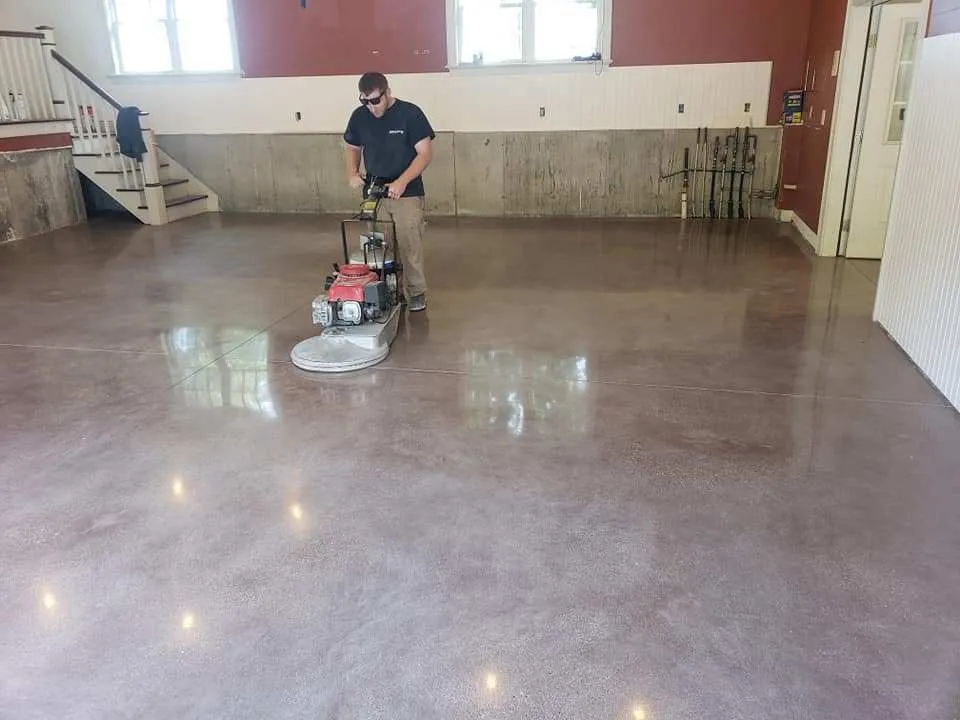
What’s included
- Moisture testing of the slab
- Diamond grinding to open the surface
- Moisture-vapor barrier primer where needed
- Crack and joint repair
- Compatible epoxy or polyaspartic system on top
How it works
Test
We test the slab for moisture vapor so we know what we are working with before anything is coated.Open the surface
Diamond grinding opens the slab so a barrier primer can penetrate and bond.Apply the barrier
A moisture-vapor barrier goes down where testing shows it is needed.Coat on top
The decorative or protective system is applied over the barrier.
What to know before you start
Why moisture matters
Concrete is porous. Water in the soil under a slab can move upward as vapor and, when trapped under a coating, can cause bubbling and delamination.
Alkaline salts
Rising moisture can carry salts that attack the bond between coating and concrete. The right primer is built to resist this.
Not every slab needs it
Some slabs test dry. Testing tells us whether a barrier is worth the cost, so you only pay for what the floor needs.
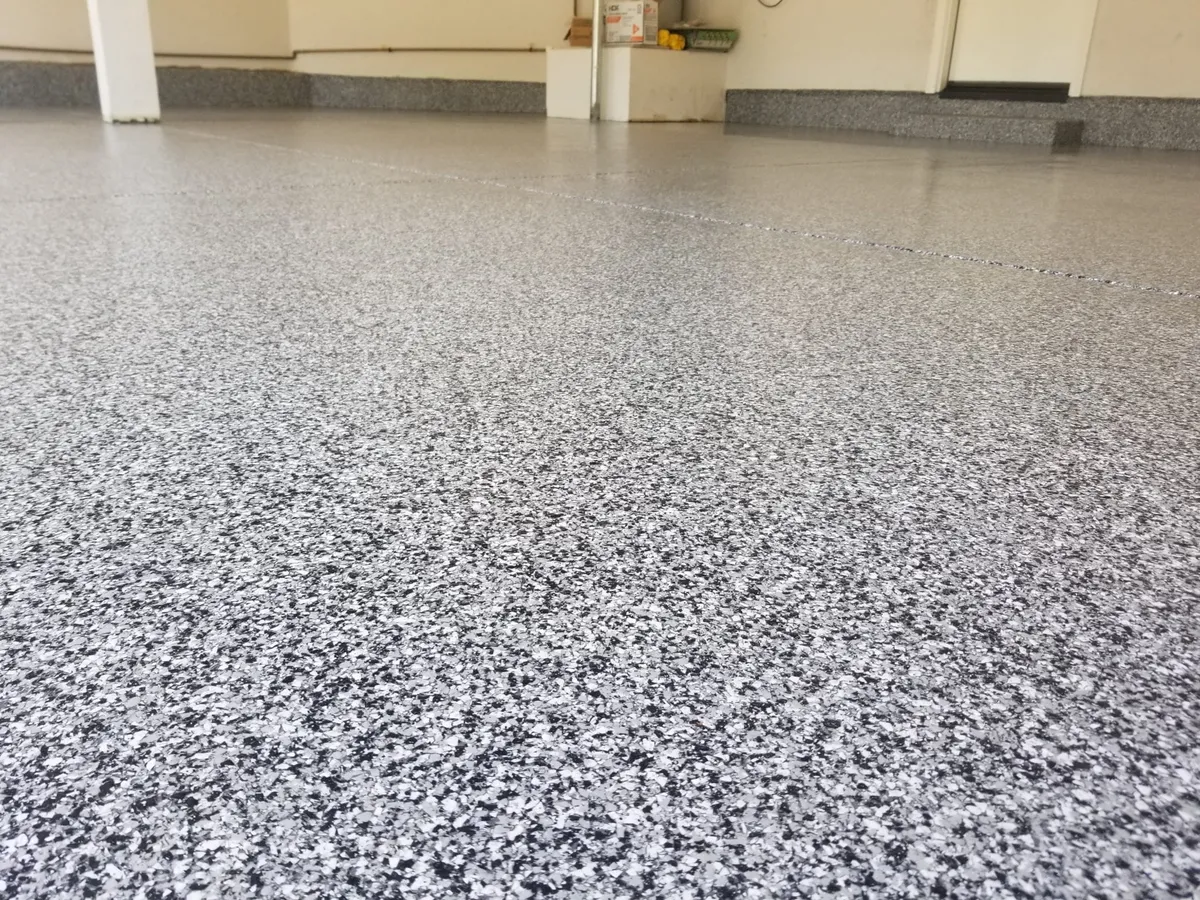
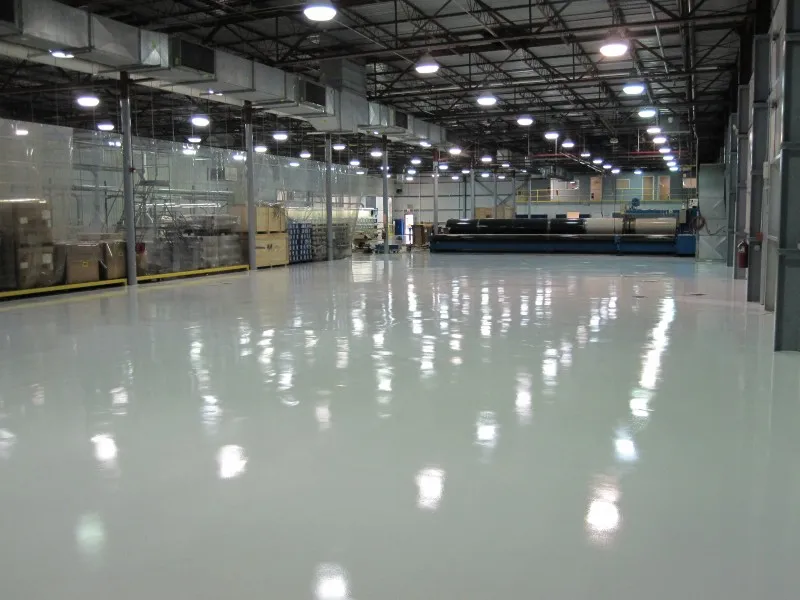
Project photos
Common questions
How do you test for moisture?
We use accepted testing methods on the slab before coating, and explain the results and what they mean for your floor.
My old epoxy is peeling. Is that moisture?
It can be, but poor prep is another common cause. We look at the failed coating and the slab to find out.
Does a barrier add much time?
It adds a step, and we plan for it in the schedule at the estimate.
Get a free on-site estimate
Tell us about your project and pick a time. We will meet you at the property, look at the site and give you a clear written price.